A year of preparation and one moment in Savannah
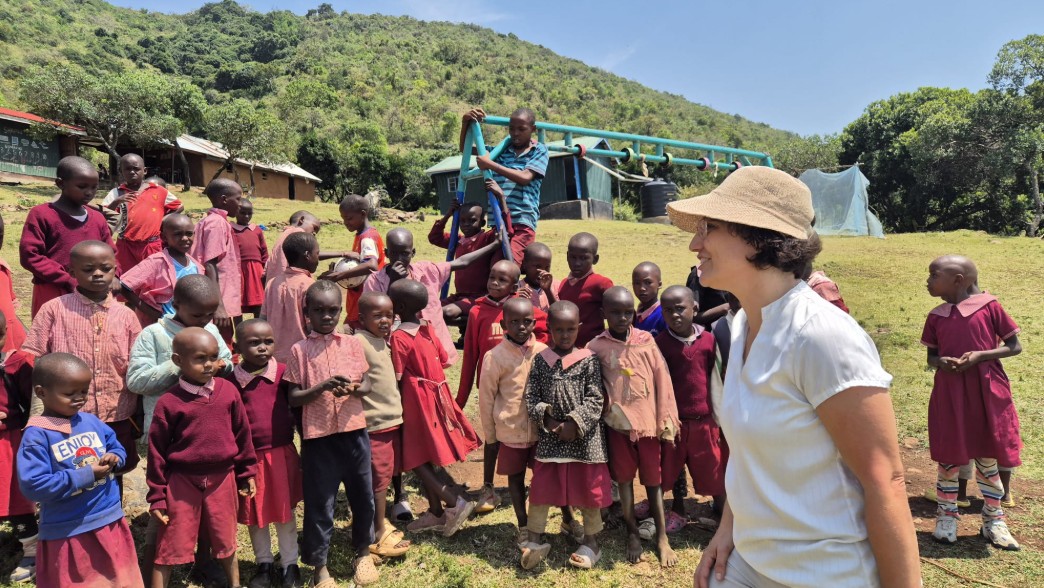
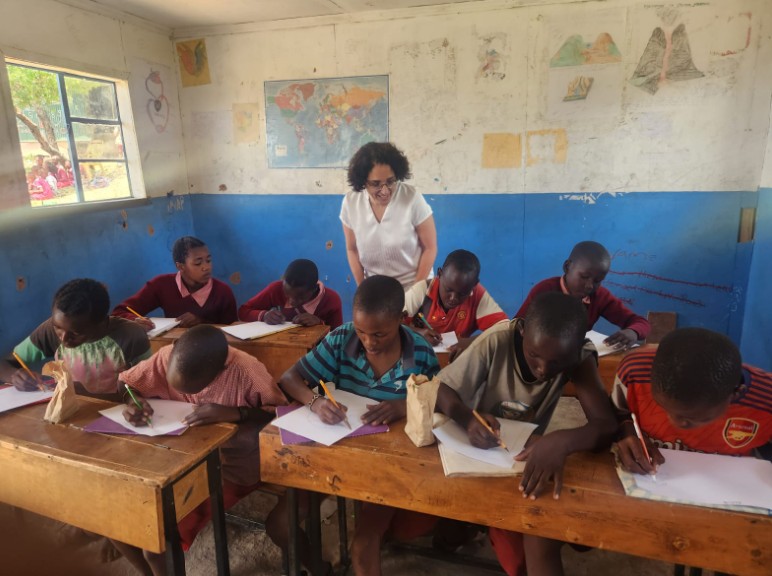
My journey to the heart of Africa begins long before the plane takes off. I spend months submitting applications to the local Ministry of Education, in meetings, coordination, and building trusting relationships with the schools. Sometimes it takes almost a year of work behind the scenes – and only then does the long-awaited approval arrive that allows me to sit in front of the children with a piece of paper and paints.
But even after all the preparations, nothing is guaranteed. Sometimes I arrive at the site and discover that the doors are closed – that the house manager has changed his mind or that the approval has not been received. At such moments, my heart breaks: a whole world of children is right in front of me, and I can’t reach it.
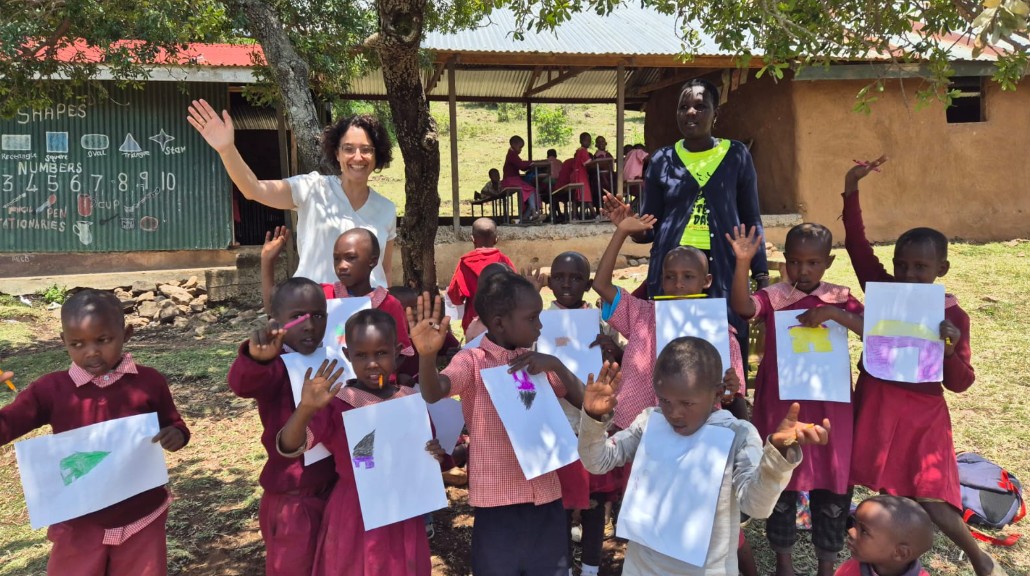
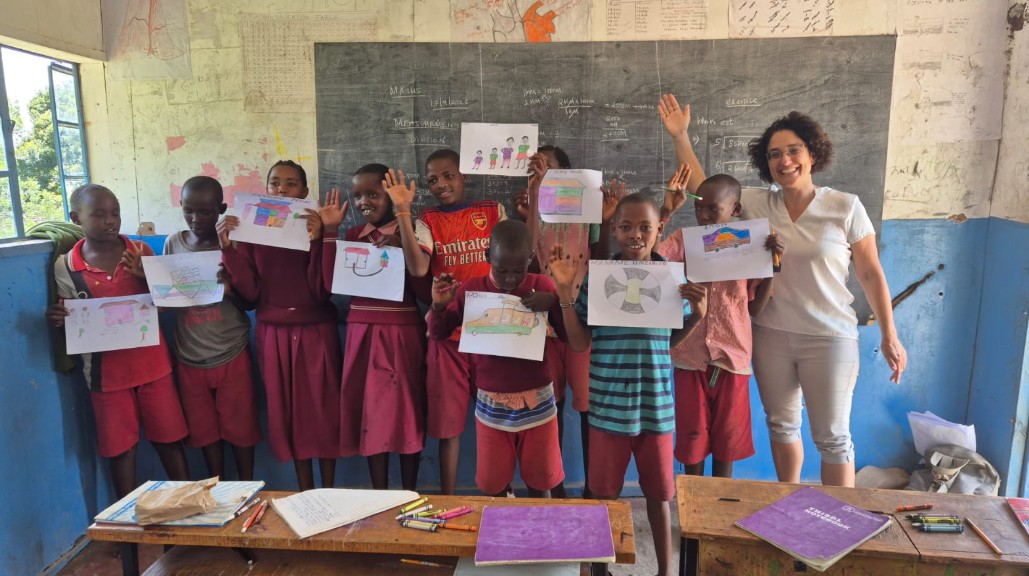
And yet, there are also the other moments – when the classroom opens, the children gather around me and I hand them pages. So this whole year converges on one point: a first drawing that begins to speak. A simple line of a child drawing his house becomes a testimony of belonging, fear or dream. In Masai Mara’s, time moves more slowly. The herds of cattle, the wind, the slow pace – everything reminds me that this research is not just about collecting data.It is a rare opportunity to listen to children who tell their world without words – through color, shape, and line
The house at the end of the page: a symbol of belonging and security
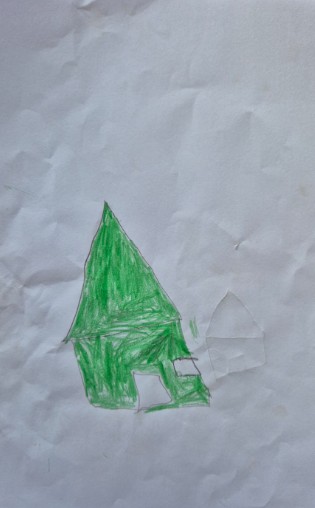
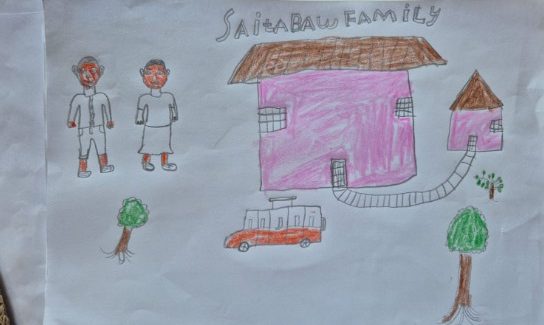
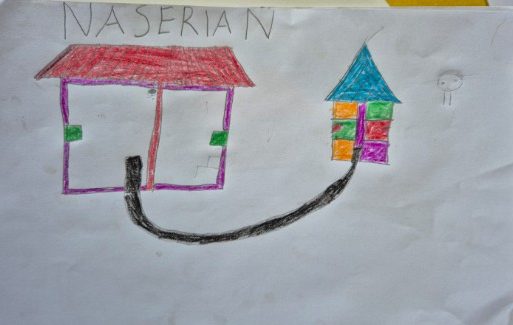
One of the things that recurs again and again in the children's drawings I encountered in Masai Mara is the house. Sometimes it is drawn alone, without figures, without trees or herds – just one building, sometimes small and sideways, that appears quietly on the page. At first glance, it seems like a marginal detail, but the more you look at it, the more it becomes clear that it is the heart of the drawing – and often also the heart of the soul.
The house is not just a description of a place of residence, it is a symbolic anchor, a metaphor for the "Self" or the "Self-family" – the axis around which the child's world is built. The choice to draw a house, rather than figures, indicates that what defines identity, security, and a sense of belonging is entirely wrapped up in the representation of the house.
Sometimes the house appears in the center of the page, and other times the location is off-center. In both cases there is no figure nearby, which reveals that here the self is not at the center. The child is not the "main character" of the painting, as is often the case in the West, but part of a larger fabric. He knows that he belongs, but does not have to place himself at the center of the scene.
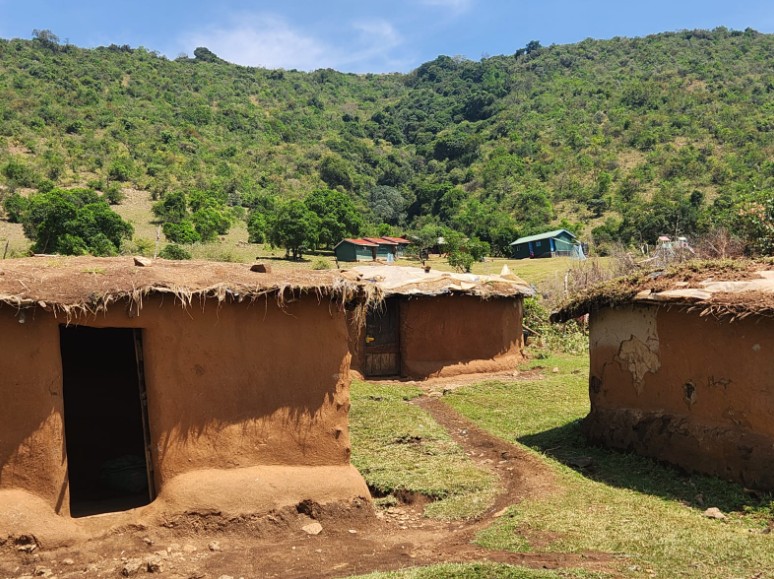
This meaning is deeply rooted in the social structure of the Maasai. Each woman builds her own hut – "the manyatta" – for her family. The house is a clear expression of the mother unit, a small island of belonging within the communal space. For the child, it is not a “village” or a “tribe” in the broad sense, but “my place” – the safe domain that contains his world. The drawing of the house is not topographical, it is emotional. It does not describe the location of the village in space, but the emotional fulcrum from which the child experiences his life. In this sense, the house is drawn not as a physical address but as a symbolic space – the place that defines “who I am” within the world.
Although in all sorts of cases children’s drawings are cross-cultural, this is not always the case. For example, in Western cultures, the drawing of a single house usually indicates a sense of loneliness and lack of belonging. From all the research I have conducted over the years, I have learned that it is not right to come up with “Western tools” and use them to decipher children’s drawings in tribes. Here too, I learned that the meaning of a lonely house is not necessarily related to social isolation, and the way children in tribes draw social belonging is through agreed-upon tribal symbols. One draws and everyone immediately follows - this is the way to belong.
Collective Child: Me, the Family, and the Herd
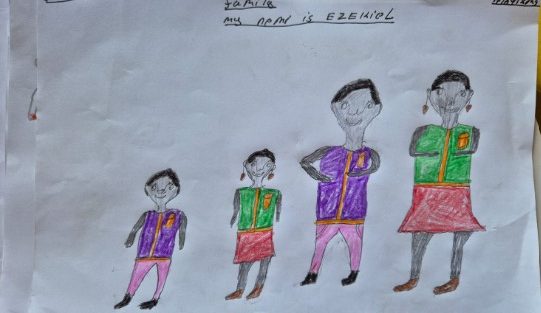
One of the most surprising things about looking at the children’s drawings in the Mara essays is precisely what is not there: you will almost never see a drawing of a single child in the center of the page. There are no self-portraits, no “me and my house,” and often there is no single figure who wants to stand in the center. Instead, there are general elements – a house, a landscape, sometimes family members (not including the child himself) – but no personal story in which the child places himself at the center of the plot.
This finding reveals one of the most profound insights in the study: the child’s identity in the essays is first and foremost a collective identity. The child does not perceive himself as a separate unit that exists on its own, but as part of a broader fabric – familial, social, or natural.
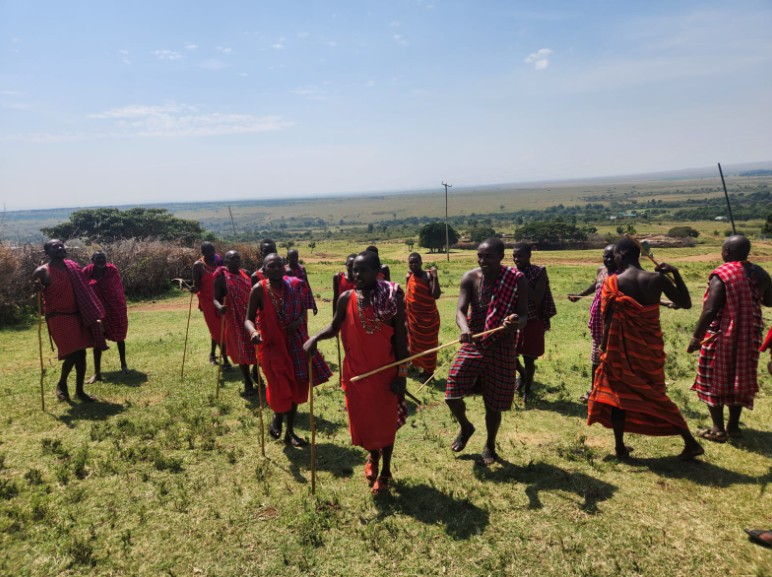
So how do you work with house paintings in tribes? First, as early as 1967, in the important study by Rhoda Kellogg, who collected over 8,000 children's paintings from ancient cultures, we learned that the house is an archetypal representation. Even if there is no triangular roof in reality, such a roof will appear as part of a house painting. I noticed in a considerable number of the paintings a large door and a welcoming entrance, and this suited the conduct in the village: a woman came out of one of the houses to welcome us with a song, and immediately her neighbors came out of all the neighboring houses and joined in the singing. When they finished, they did not ask for money, they just smiled and returned to their homes.
The small windows were also a moment of insight in the research. Do the children draw small windows as evidence of the small windows of the houses in which they live? It is known that children do not draw physical reality, but emotional reality. Here too, the size of the windows must be observed together with the culture in which they are drawn. A tribal culture is a culture that encourages less expression of emotions, a culture that values restraint and courage even in painful encounters.
Blood, Rituals, and Identity: What Appears and What Is Absent in Paintings
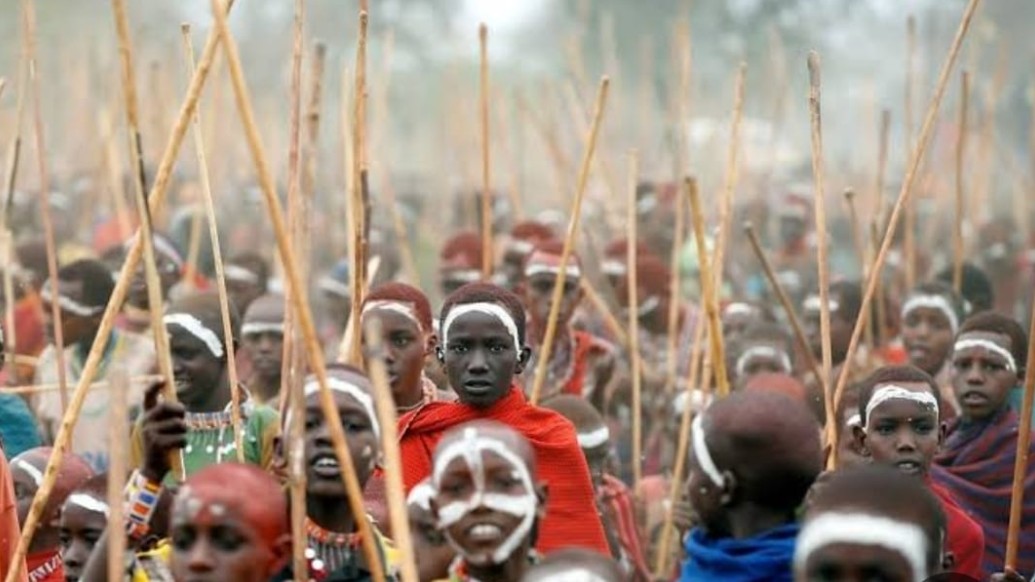
The more I delved into the drawings of the children in Maasai Mara, the stronger my sense of wonder grew: entire parts of their cultural life hardly appear on the page. Not the circumcision ceremonies, not the formative moments of the transition from childhood to adulthood, not the white face painting that blurs personal identity within a ceremonial group – all of these, which are at the heart of the Maasai experience of growing up, are simply not drawn.
This fact is especially surprising in light of the central place that the rituals of life occupy in Maasai society. At puberty, for example, boys undergo a full circumcision ceremony, without any anesthesia – a painful and challenging physical process accompanied by a dramatic test of courage: you are not allowed to blink, you are not allowed to cry, you are not allowed to move. The boy who manages to maintain stability is considered ready to protect the community, and only then does he move on to the next stage of his social life. This is a formative moment of identity – and yet it is not translated into a painting.
Even deeper customs – such as the use of blood as part of life rituals – are almost absent from the paintings. Blood, which is boiled and mixed with milk to give strength, which is offered to the mother after childbirth, which is passed on as a dowry from the groom’s family to the future bride – all these are powerful cultural elements. They are as intertwined with everyday life as a house or a herd of cattle, and yet they do not find their way onto the page. This absence is not a “lack of knowledge” or a “missing out” on the part of the child. It indicates something much deeper: that these rituals are perceived as part of the natural order of life – as something that is self-evident, requiring no representation. Like the air we breathe, they are present everywhere and therefore do not need to be marked.
The absence of rites of passage may indicate an early internalization of cultural identity. The child does not view the ritual as an “other” event that needs to be marked or explained, but as something that is an integral part of himself. From the moment he is born, his life moves according to the rhythm of the communal cycle: childhood, circumcision, the warrior stage, adulthood, marriage. There are no “exceptional events” here – there is a natural and inevitable process. Another striking absence is that of the spiritual world. Despite the importance of belief in Enkai – the great god – I did not find religious symbols, sacred objects or representations of a higher world in the paintings. Here too, it is possible that the spiritual experience is not perceived as something “outside” of life, but as an inseparable part of it. It is precisely what is not painted that teaches us a lot. He reveals how powerful experiences such as courage, purity, community and spirituality are assimilated into the soul from such a young age that they cease to be “subjects for painting” and become the language of life itself.
Universal and local: what children's drawings teach us about the human soul
The more I looked at the drawings of children in Masai Mara, the stronger my sense of duality became: on the one hand – something in these drawings seemed incredibly familiar, almost universal; on the other – they bear a clear and unique cultural imprint that is unmistakable.
On the universal side, I found the same motifs that appear in almost every culture: a house with a pointed roof and a window, a figure of a mother or father. Children all over the world draw the anchor points of their lives – the place where they feel safe, the people close to them, the environment that gives them meaning. Here too, in the middle of the savannah, these symbols appear again and again, almost in the same way they appear in a child’s notebook in Europe or Israel.
But on the common side there is also a clear uniqueness – and it lies mainly in what is missing, in what is omitted or reduced. The children in Masai almost never draw scenes of play – I found a drawing of football, but I did not find a scene of children playing. This may be because childhood, as reflected in the painting, is not a stage in itself but part of a life continuum that leads to adulthood. Painting often expresses preparation for a role: boys draw themselves alongside symbols of responsibility or power, busy with drawing subjects related to the outside world: drawing the nearby road, the path leading to the neighboring village, and girls often draw the space of the house and the mother: drawing the living room, connected by a path to a small house in the back, which is actually the kitchen. Geographic space is also represented differently. Children in the West tend to draw fences, roads, or walls – boundaries that mark privacy and ownership. In Masai, there is almost no marking of a boundary: the village is open, the hut stands in a natural space free of partitions. The feeling is of inner security that does not depend on a physical barrier.
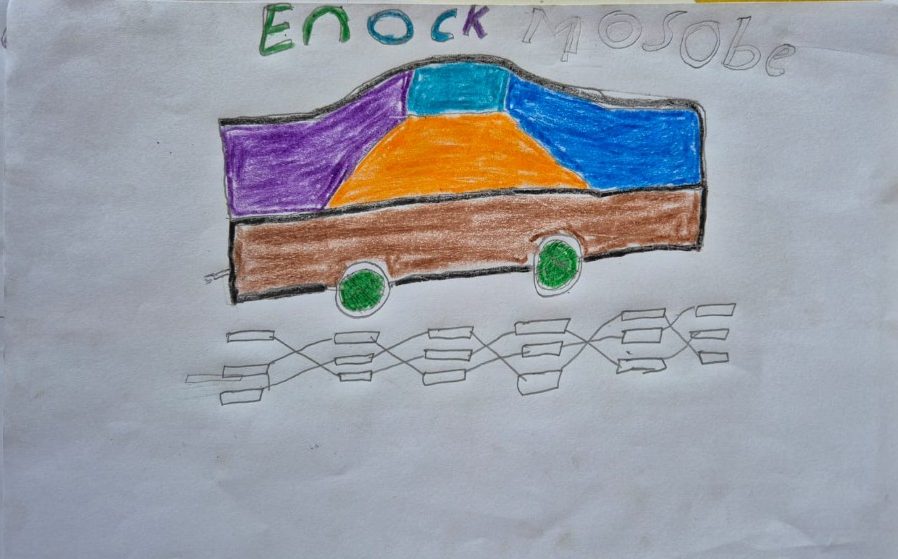
It is also interesting to note what is not included on the page: predatory animals are almost never drawn, even though they are part of the everyday landscape. Symbols such as a school also hardly appear, even though they exist on the ground. It seems that the children choose to draw the world as they experience it from the inside, not as it appears from the outside.
It is precisely this tension between the universal and the local that tells the real story of the paintings. On the one hand, we all share the same basic needs – security, belonging, love. On the other hand, the way we express them – what goes on the page, what is left out, what is considered “the child’s world” – is born from the culture to which we belong. In this sense, each painting is both a window into the soul and a mirror of society. It shows us what a child is like anywhere in the world – one who needs roots, a home, significant figures – and also what a child is like here, in Masai Mara – one who lives within a community, derives his identity from it, and defines himself through space, belonging, and collective memory.
What the children's drawings of the Maasai Mara tribe really taught me
Every time I open a new research notebook in Maasai Mara, I know one thing for sure: this time too, the children will teach me something I didn't know about the world - and especially about myself. This research began out of professional curiosity - a desire to understand how children from other cultures express their inner world through drawing. But the more I delved deeper, the more I realized that it was much more than that. Each small drawing became a mirror that brought back to me big questions about identity, belonging, body, community, fear and security.
The lonely house that appears on the side of the page reminded me that the place we belong to is not just a physical structure - it is a symbol of ourselves. The absence of the "I" at the center taught me that sometimes separateness is created out of belonging, not out of resistance to it. And the ritual-free drawings showed me that some of our most powerful experiences are simply so deeply embedded in identity that we don't need to "draw" them - they are already us.
Encountering Maasai culture revealed another truth to me: there are many ways to be a child. There is a childhood defined by games and imagination, and there is a childhood aimed at adulthood and a role. There are children who depict themselves at the center, and there are children who depict the home or family in their place. And amidst all this diversity, there is also a deep human common denominator - the desire to know that we belong, that we are protected, that we have a place in the world. When I sit with a child in a bitter essay and watch him hold a pencil in his hand, I understand once again how much drawing is a universal language of the soul. It crosses borders, religions, languages and traditions. It allows the child to speak without knowing that he is speaking - and for us, the adults, to listen to what is not said.
And when I close the field notebook and return home, I take with me not only findings for research, but also a simple and profound reminder: that the human soul - no matter whether it lives in the heart of a Western city or in a small village in the savannah - is always looking for ways to tell its story. Each drawing is a small chapter in its story.
More about deciphering children's drawings, at the link here